
Back to blog
Quesvio Blog
Quesvio: Candidate Screening That Respects Everyone’s Time
Published 10 May 2026
Hiring often starts with the same problem: too many resumes, too little time, and not enough real information to make a confident decision.
A recruiter can receive 50, 100, or even more applications for one role. Many resumes look polished. Many candidates seem relevant. But after the resume stage, the real question begins:
Who should move forward?
This is where Quesvio helps.
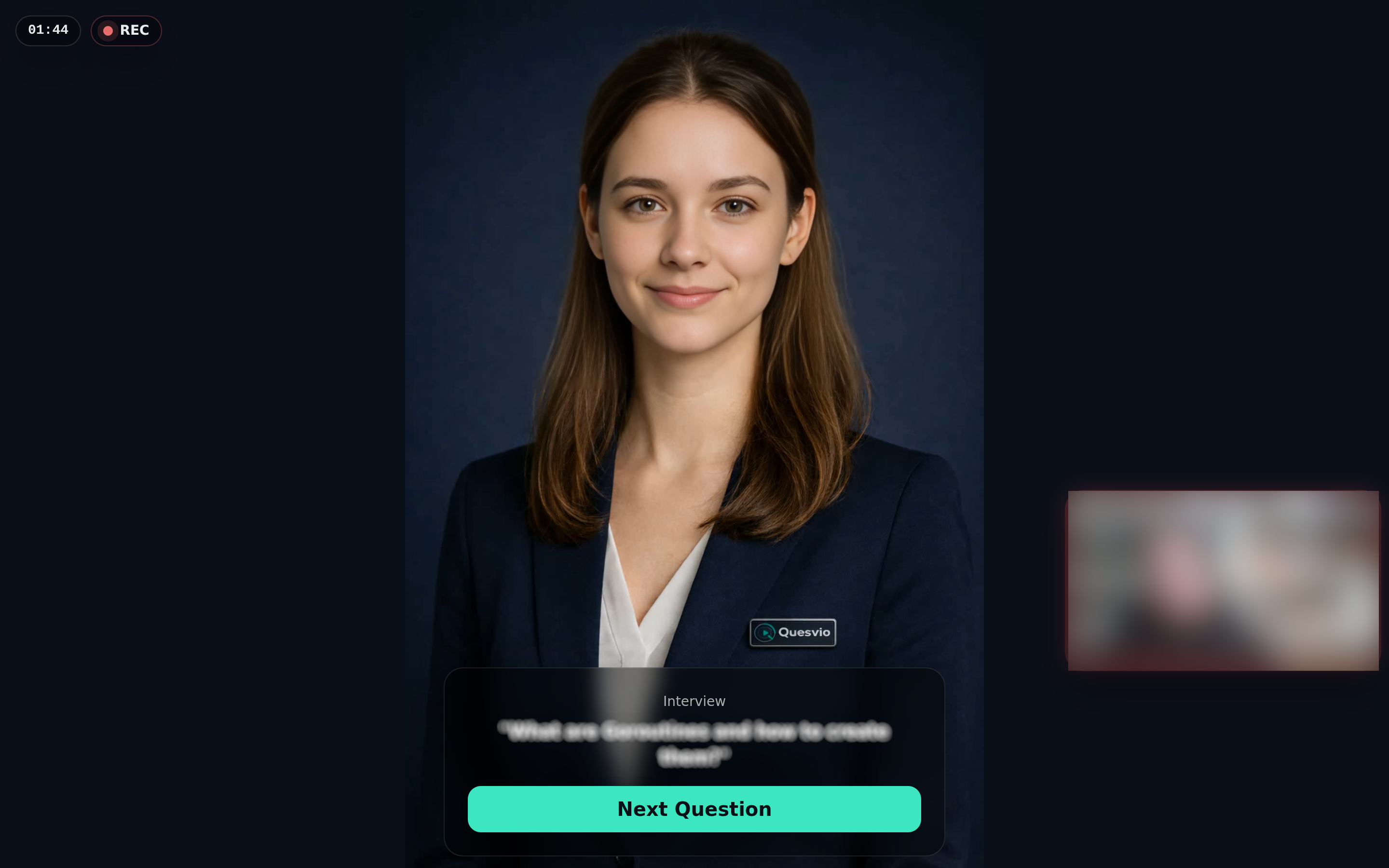
Quesvio is an asynchronous candidate screening platform that helps recruiters and hiring teams collect structured candidate answers without scheduling every first screening call live.
It is not only about saving recruiter time. It is also about respecting the candidate’s time and creating a clearer first step after resume review.
A resume is useful, but it is rarely the full picture.
It can show experience, companies, technologies, education, and achievements. But it does not always show how a candidate thinks, communicates, explains past work, or responds to specific questions.
That is why recruiters often need more context after reading a resume.
The traditional next step is usually a live screening call, a long email thread, or a chat with follow-up questions. But this can create friction for both sides.
Recruiters often ask the same questions again and again: availability, motivation, salary expectations, communication style, relevant experience, technical background, or role-specific details.
Candidates may also spend time answering scattered questions after sending a resume, waiting for replies, or scheduling a call before knowing whether there is real mutual fit.
This stage should be simpler.
Asynchronous candidate screening means candidates can answer screening questions in their own time, without needing a live call for the first step.
Recruiters choose or create questions, send the screening to candidates, and review structured answers later.
This helps reduce scheduling, repeated first calls, and long back-and-forth messages.
With Quesvio, recruiters can use ready-made questions for different hiring scenarios, including HR screening, soft skills evaluation, technical screening, and role-specific candidate checks.
Questions can be found using tags, categories, and search, so recruiters do not need to build everything from scratch.
The goal is simple: help recruiters understand candidates faster, while giving candidates a clear way to present themselves beyond the resume.
Asynchronous screening is especially useful when there are many candidates after the resume stage.
For example, a recruiter may have more than 100 resumes for one role. Many of them may look relevant. But scheduling live calls with everyone is not realistic.
At the same time, rejecting candidates based only on a resume can be too limited.
Quesvio helps fill this gap.
Instead of choosing blindly or spending hours on first calls, recruiters can ask structured questions and review candidate answers later.
This is useful when:
Async screening does not replace human judgment. It gives recruiters better information before deciding who should move to the next step.
Recruiters spend a lot of time on repetitive early-stage screening.
The same questions are asked again and again. The same scheduling messages are sent. The same basic information is collected manually.
Quesvio helps reduce this repetitive work.
Instead of spending time on every first live call, recruiters can collect candidate answers asynchronously and review them in one place.
This gives recruiters more time for the parts of hiring that need human attention: evaluating fit, speaking with the most relevant candidates, coordinating with hiring managers, and improving the candidate experience.
It also helps small hiring teams. A company does not need a large HR department to create a structured screening process.
Candidate time matters too.
A candidate should not have to answer endless follow-up questions in chat after already sending a resume. They should not have to wait through several scheduling messages just to complete a basic first screening step.
A better process gives the candidate a clear place to answer relevant questions.
With asynchronous screening, the candidate can respond when it is convenient. They can understand what is being asked and present more than a resume, without the pressure or scheduling friction of a live call.
This is especially important because a resume does not always show the full candidate.
A person may have strong communication skills, clear motivation, or relevant practical experience that is not obvious from the CV. Structured screening questions give them a better chance to show that.
Quesvio is not about replacing real conversations.
Live interviews are still important. Human connection matters. Complex evaluation, final interviews, culture fit discussions, and decision-making still need people.
But not every first screening step needs to be a live call.
Async screening helps recruiters decide who should get that live call.
It creates a better bridge between the resume and the interview.
Quesvio is built for the stage after resume review, when recruiters need to understand candidates better but do not want to spend hours on repeated first calls.
It helps recruiters save time, collect structured answers, and make the next step more informed.
It helps candidates answer clearly, avoid unnecessary scheduling, and present themselves beyond the resume.
Good hiring is not only about speed. It is also about clarity and respect.
Quesvio helps create a more respectful first screening step — for recruiters and for candidates.